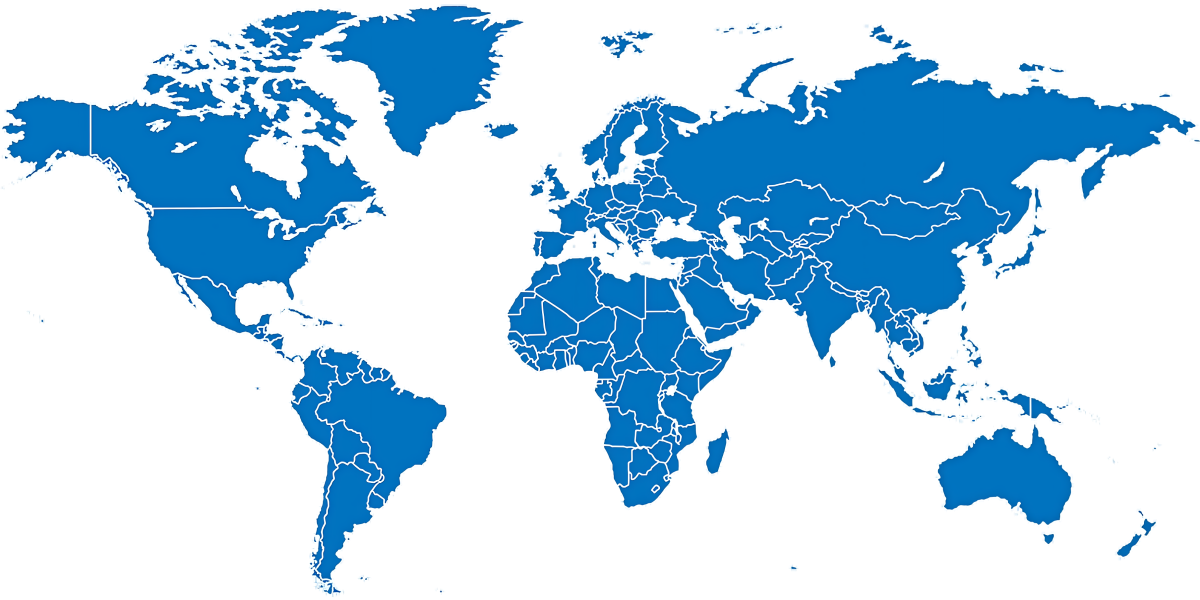
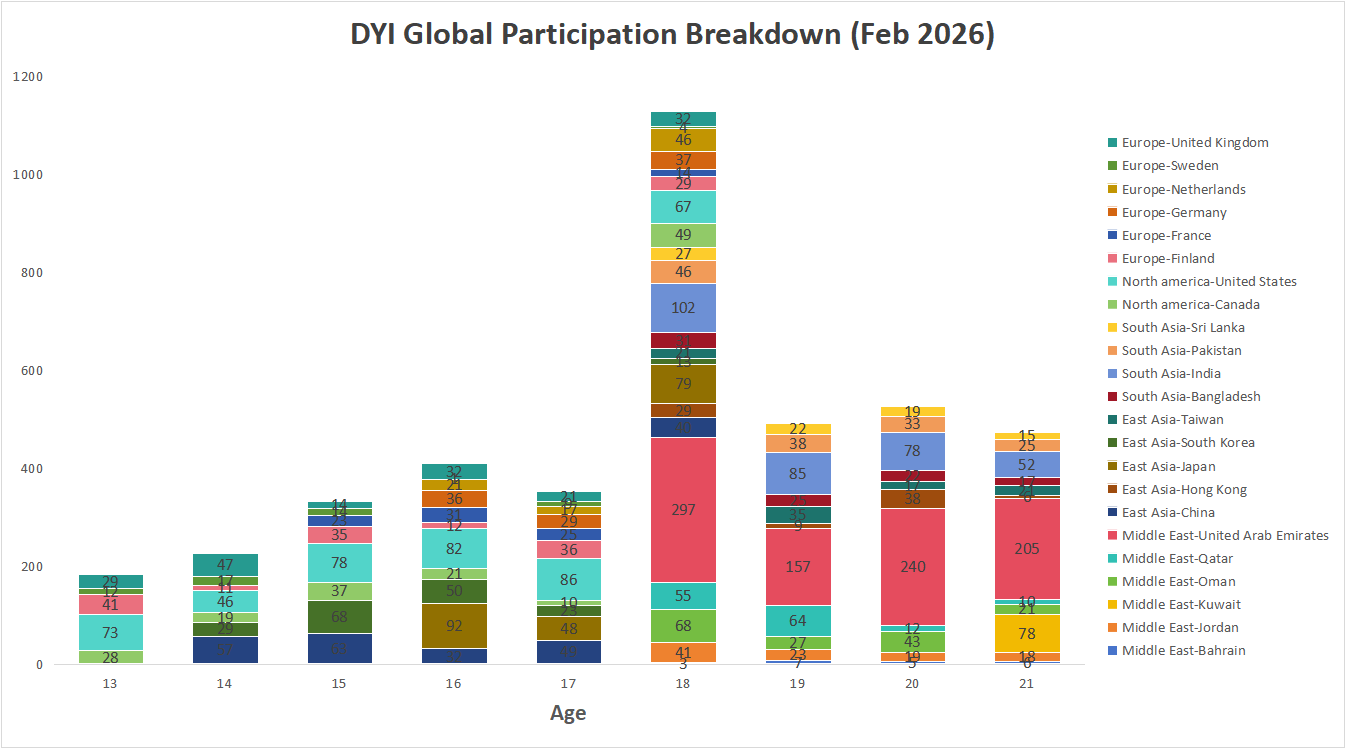
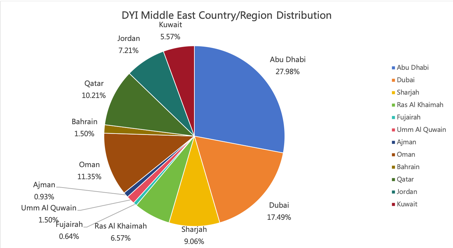
- Abu Dhabi: 392
- Dubai: 245
- Sharjah: 127
- Ras Al Khaimah: 92
- Fujairah: 9
- Umm Al Quwain: 21
- Ajman: 13
- Oman: 159
- Bahrain: 21
- Qatar: 143
- Kuwait: 78
- Jordan: 101
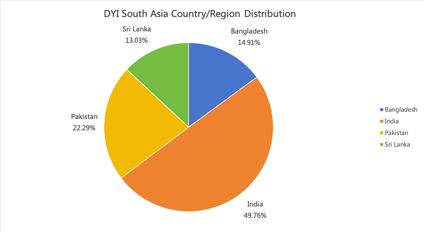
- India: 317
- Sri Lanka: 83
- Bangladesh: 95
- Pakistan: 142
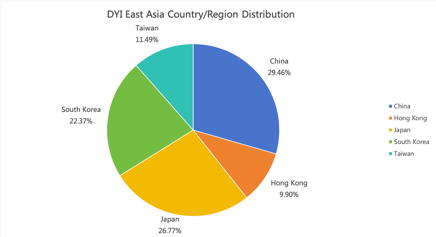
- China Mainland: 241
- Hong Kong: 81
- Taiwan: 94
- South Korea: 183
- Japan: 219
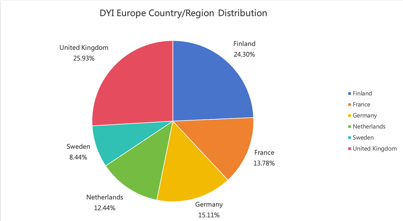
- United Kingdom: 175
- Sweden: 57
- Finland: 164
- France: 93
- Germany: 102
- Netherlands: 84
- United Kingdom: 175
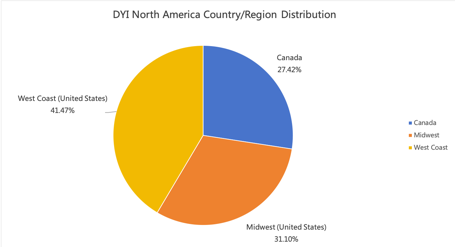
- USA: 434
- Canada: 164

| Region | Country / Territory | Age Threshold | Legal Description | Legal Reference |
|---|---|---|---|---|
| Middle East | UAE | 18+ |
Wadeema Law defines a child as <18. Processing minor data without parental consent is restricted.
|
UAE Legislation |
| Oman | 18+ |
Royal Decree 6/2022 prohibits processing child data without express guardian consent.
|
GCC BDI | |
| Bahrain | 18+ |
PDPL (2018) treats 18 as the competence age for data, though civil majority is 21.
|
Lexis Middle East |

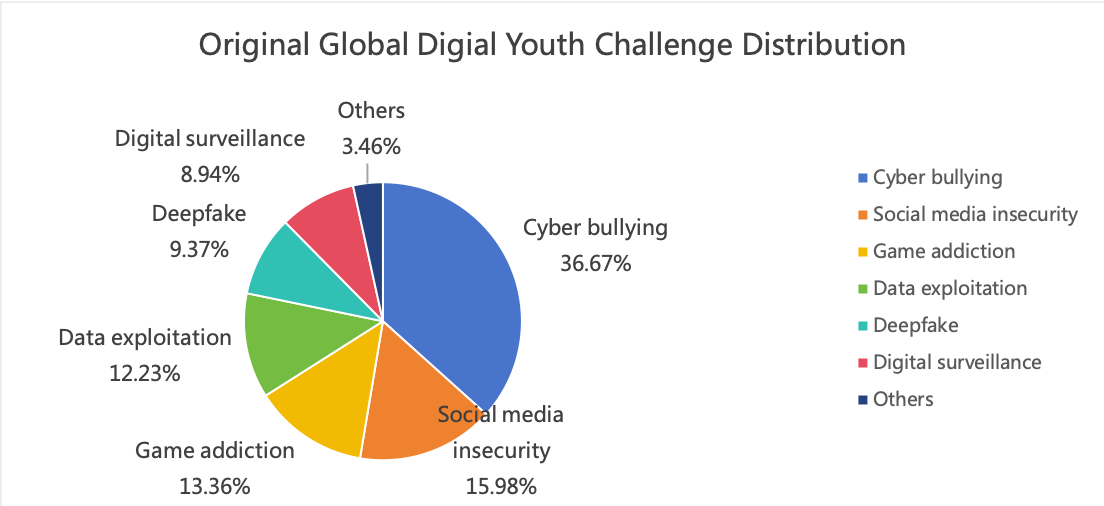
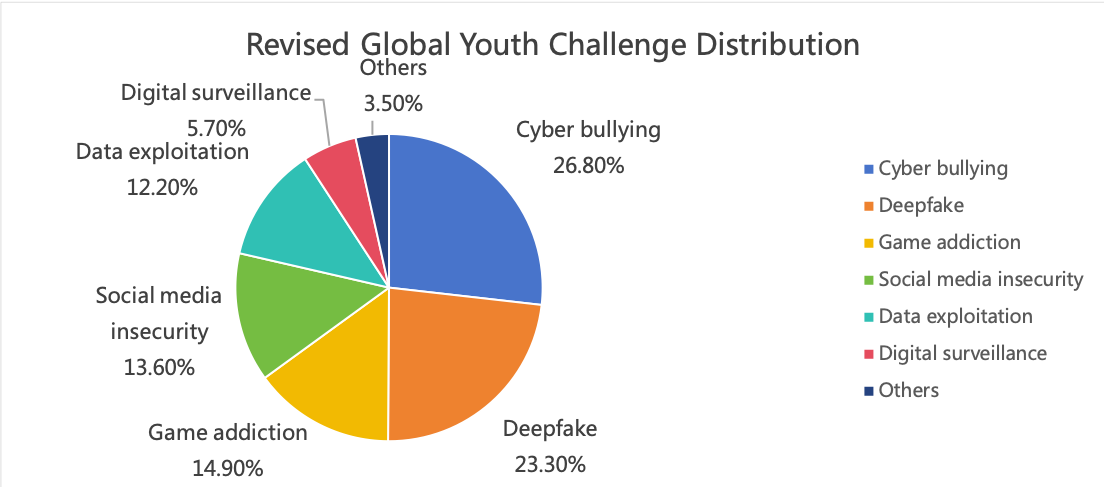
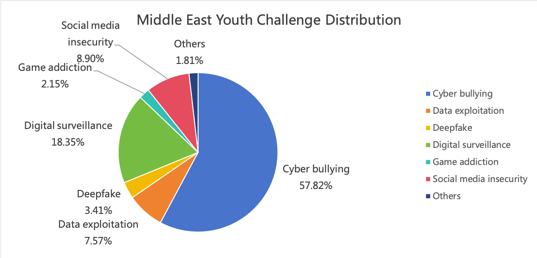
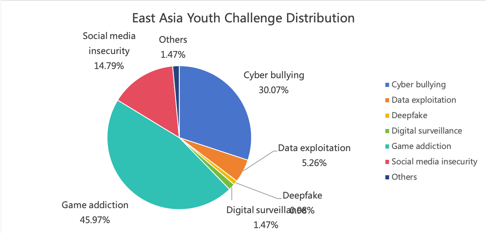
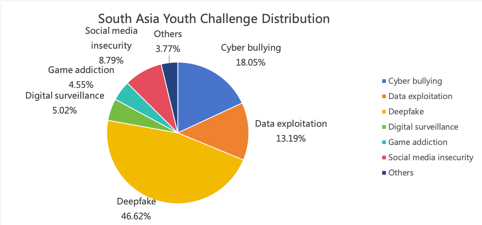
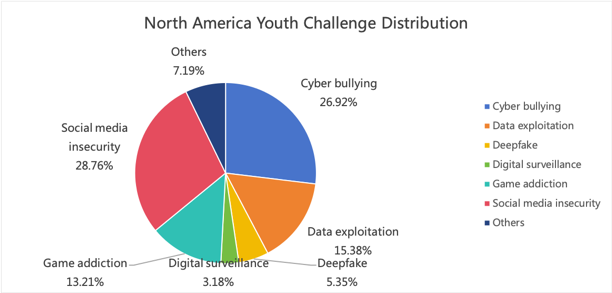
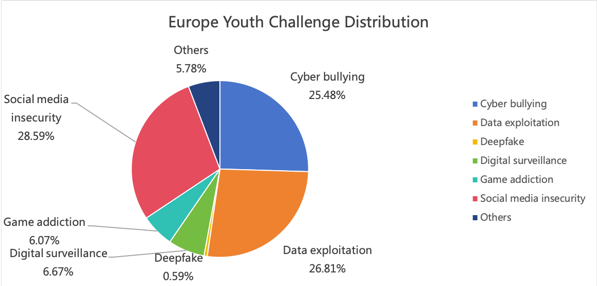
Revised Global Digital Youth Challenge Distribution was revised using the following weighted average formula, in order to fit the disparity of youth population around the world.
Pglobal =
( wi = 1 ×
)
5
∑
i=1
Ci
Ni

Where:
- • Pglobal: Weighted global percentage for a given category
- • Wi: Demographic weight of region i
- • Ci: Count of the category in region i
- • Ni: Total number of responses collected in region i
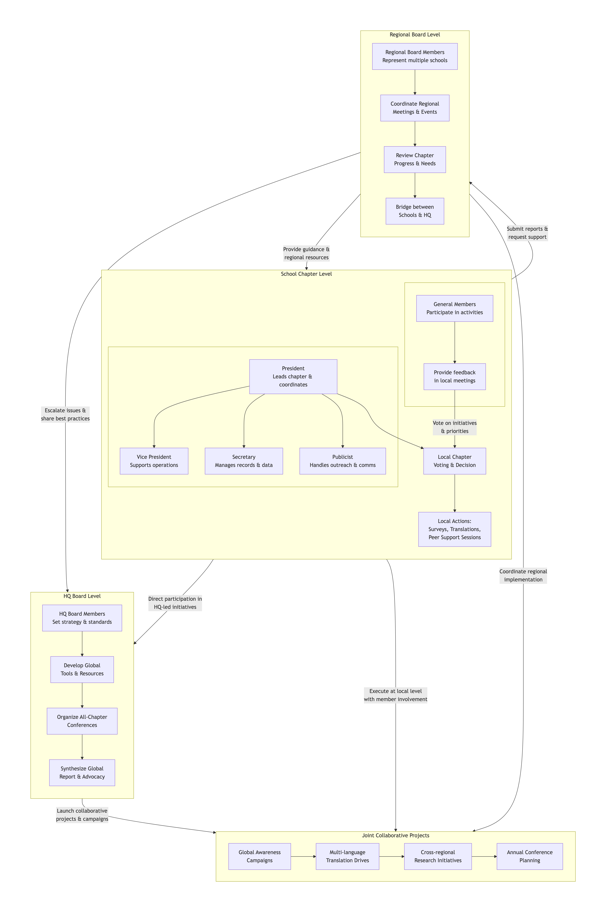
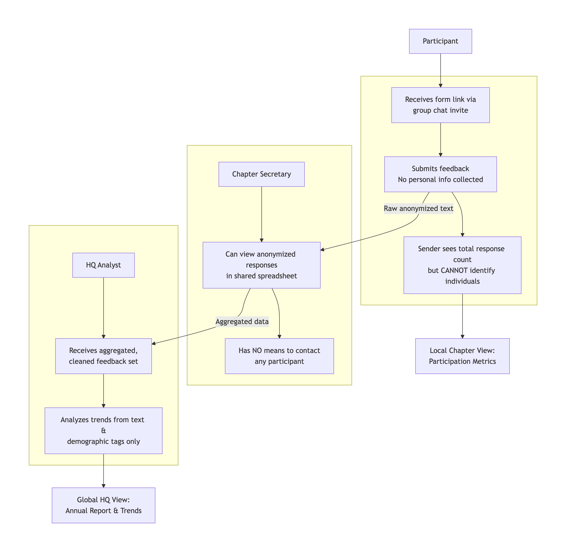
DYI’s two core systems for protecting participants and feedback
Decentralization
Double-blind

DIGITAL YOUTH INTERNATIONAL (DYI) FEEDBACK LIMITATIONS AND DISCLAIMER
The feedback provided by the Digital Youth International (DYI) for the February 2026 reporting cycle offers a descriptive overview of youth digital participation. However, several limitations of our methodology must be acknowledged to ensure the findings are interpreted correctly.
- 1. Sampling and Representativeness within DYI The DYI feedback is primarily based on non-random convenience samples. Participants were recruited through accessible channels like specific schools or regional organizations rather than through national probability sampling. This means the findings primarily reflect the specific groups sampled and may not be representative of the broader youth population in each country. Furthermore, there is a significant imbalance in sample sizes across the DYI network, such as 899 respondents in the United Arab Emirates compared to only 21 in Bahrain or 57 in Sweden. These discrepancies limit the external validity and make reliable comparisons difficult. Reference: The Inconvenient Truth About Convenience and Purposive Samples
- 2. Inconsistent Age and Demographic Coverage DYI does not cover a consistent age cohort across all regions. In North American and European samples, the feedback focuses on youth aged 13 to 18. Conversely, in the Middle East and South Asia, the feedback focuses heavily on young adults aged 18 to 21. This demographic heterogeneity complicates cross-regional comparisons because digital behaviors and risk perceptions often change significantly as individuals transition from mid-adolescence to young adulthood. Reference: Adolescents’ Life Satisfaction and the Moderating Role of Gender: A Cross-Country Analysis
- 3. Self-Reporting and Measurement Bias The results of the DYI survey rely on first-hand consented feedback, which can be influenced by social desirability bias. Participants may under-report sensitive behaviors or over-report socially acceptable ones. Additionally, since DYI operates in multiple languages, the translation of key concepts such as cyberbullying or digital surveillance may not be perfectly equivalent across all versions of the survey, potentially leading to different interpretations by participants in different countries. Reference: A solution to the pervasive problem of response bias in self-reports
- 4. Cultural and Contextual Influence on cultural norms can significantly impact how DYI participants respond to survey questions. Different cultural groups may exhibit distinct response styles, such as a tendency toward extreme answers or a preference for neutral options. These patterns can create the appearance of statistical differences between nations that actually reflect cultural communication styles rather than actual differences in digital experiences. Reference: Do Cross-National and Ethnic Group Bullying Comparisons Represent Reality?
- 5. Statistical Constraints and Generalizability Due to the small sample sizes in certain DYI regions, the margin of error for those specific subsets is high. Without population weighting, the feedback should be treated as a preliminary snapshot rather than a definitive longitudinal study. The cross-sectional nature of the DYI feedback also means it cannot be used to establish cause-and-effect relationships regarding youth digital behavior. Reference: Implications of Small Samples for Generalization: Adjustments and Rules of Thumb